
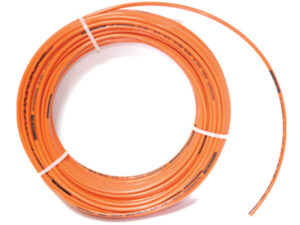
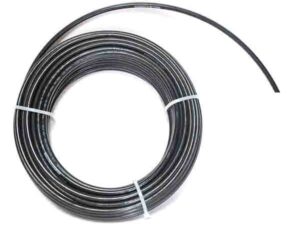
![Cold-Flex 403 hose pipe [red]](https://www.boultontrading.com/wp-content/uploads/2025/11/red-cold-flex.jpg)
![Cold-Flex 403 hose pipe [red]](https://www.boultontrading.com/wp-content/uploads/2025/11/red-cold-flex-150x150.jpg)
Description
| Specification | Detail / Value | Notes |
| Product Name | COLDFLEX 403 | A specific part number in the 2 mm product line. |
| Product Type | Flexible Capillary/Instrumentation Hose | Designed for pressure sensing and vibration damping. |
| Color | Red | The primary distinction. This color is crucial for technicians to quickly identify the hose’s function (e.g., often used for discharge/high-pressure side readings). |
| Inner Diameter (ID) | 2 mm | The small bore size is standardized for instrumentation. |
| Outer Diameter (OD) | 5.6 mm | Ensures compatibility with the range of standard Cold-Flex crimp fittings |
| Material | Specialized Low-Temperature Polymer/Elastomer | Material is formulated to resist hardening and cracking in cold applications. |
| Minimum Operating Temp | Cold Flexible Rating -20 C or lower) | Guarantees flexibility and reliability in low ambient temperatures or near cold-running components. |
| Maximum Working Pressure (WP) | Very High Pressure | Exact figure requires the manufacturer’s data sheet, but the 2 mm microbore hoses are engineered to handle high-side refrigeration pressures, often (approx. 5,800 psi). |
. Essential Features (The “Cold Flex” Benefit)
- Vibration Elimination: The hose’s main job is to provide a flexible link that absorbs and isolates vibration transmitted from cycling components (like compressors) to the pressure monitoring instruments (manometers, transducers). This ensures the instruments provide accurate, stable readings and prevents mechanical damage over time.
- High Pressure Capacity: Despite the small diameter, the hose construction (typically with fiber reinforcement) is robust enough to handle the surge and continuous high pressures found in modern refrigeration systems.
- Refrigerant and Oil Resistance: The internal materials are chemically compatible with common refrigerants and the lubricating oils used in compressors.
- Ease of Installation: The inherent flexibility allows for easier routing and connection in the often confined spaces of HVAC units and cooling equipment, especially when compared to rigid copper tubing.
- Color Coding (Red): The specific color allows for immediate visual identification of the line’s purpose in a complex system, which is vital for maintenance, troubleshooting, and safety.
Reviews
There are no reviews yet.