
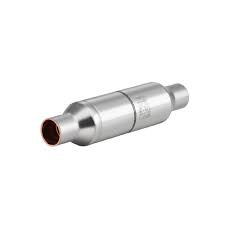
Description
✨ Sanhua CCV Series: Features and Details
1. Core Function and Construction
-
Function: Controls the unidirectional flow of refrigerant, automatically preventing backflow when the pressure differential is unfavorable.
-
Design Type: Spring-loaded Check Valve (often using a piston or disc mechanism).
-
Leakage: Engineered for reliable sealing and minimal internal leakage, maintaining system integrity.
-
Flow Type: Designed for low resistance to flow in the forward direction.
-
Body Shapes: Typically a robust Straight-Way design for in-line installation.
-
Installation: Flow direction is clearly marked by an arrow on the valve body.
2. Technical Specifications
-
Refrigerant Compatibility: Applicable for a very wide range of refrigerants, including:
-
Common HFCs/HFOs (R134a, R404A, R407C, R410A, R452A, etc.).
-
Low-GWP and Flammable Refrigerants (R290, R32).
-
Crucial Feature: High-pressure models are specifically designed and rated for R744 (CO2) applications (often called the CCV B/G series).
-
-
Max. Operating Pressure (PS) – Key Feature:
-
Standard Models: High rating, typically around 4.5MPa to 4.9MPa (45 bar to 49 bar).
-
R744 Models (CO2): Extremely high pressure rating, up to 14 MPa (140bar) or even 15 MPa (150 bar) for transcritical CO2 systems.
-
-
Medium Temperature (TS): Wide range, typically -50^C to +150C.
-
Connections: Primarily available with ODF (Solder) connections, often in larger commercial sizes (e.g., 1/2” up to 2-1/8” and larger).
-
Opening Pressure Difference (Min. OPD): Designed for low OPD to minimize pressure loss.
3. Model Variations
-
CCV: Standard check valve series (suitable for HFC/HFO up to ~45 bar).
-
CCV-G/B: Models optimized for R290/R32 flammable refrigerants.
-
CCV-R744/CCV B/G: Dedicated CO2 check valves with extremely high-pressure shells (140 bar to 150 bar rating) and specialized internal parts.
Reviews
There are no reviews yet.